Levanger church
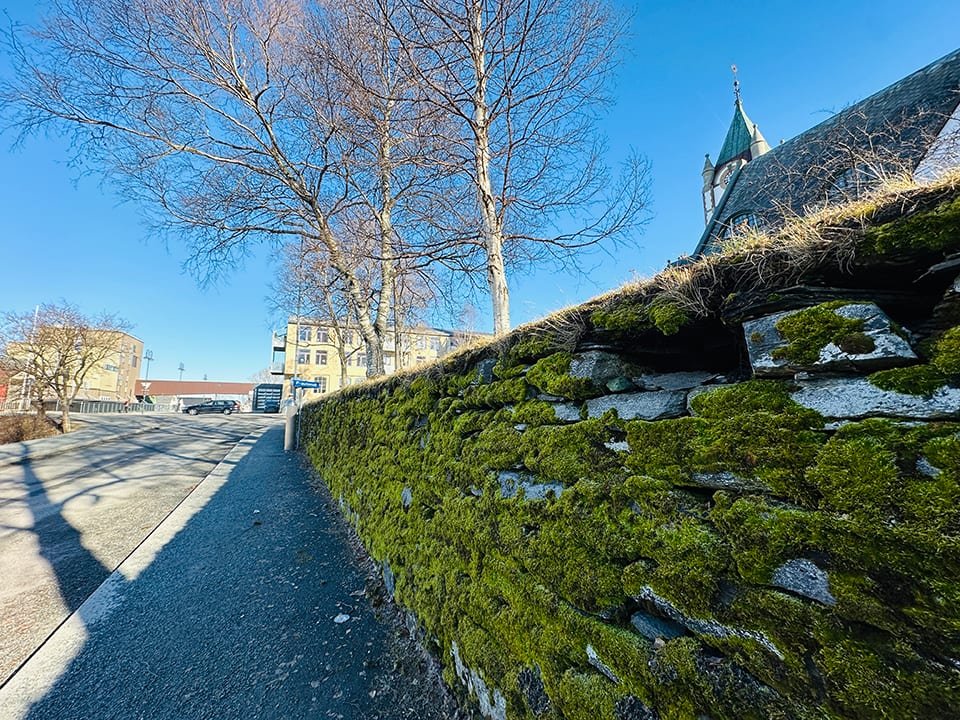
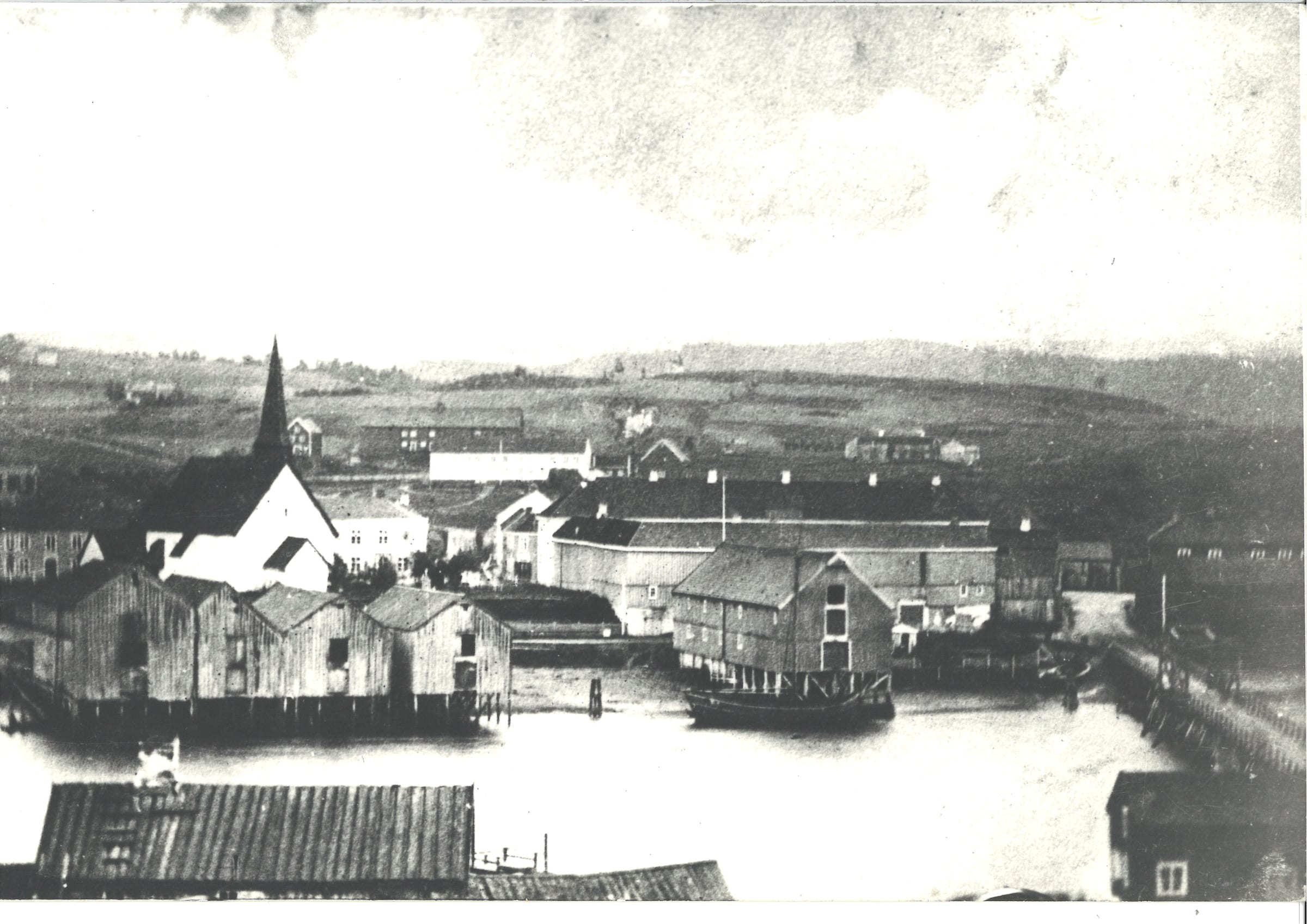
The stone comes from the site of the Medieval Church in Levanger, a stone church that was demolished in 1868. After this, a new wooden church was built on the same site, which was completed in 1870. Stone material from the Medieval Church was then used for the stone wall that surrounds the church site. Several “more or less hewn stones” are said to have been used in the wall. The best-known stone from the Medieval Church is the so-called “Levanger Stone”, which can today be found in the church collection of the Science Museum in Trondheim. It is not known for certain when the stone church was built. The oldest source we know of is Aslak Bolt’s land register from 1430, but it is likely that the church was built between 1100 and 1160.
In Askeladden, we can read this about the church’s history: “In chapter 12 of theSoga om Gunnlaug Ormstungethere are hints of a church in Levanger (“thar sem heitir i Lifángri”), as Gunnlaug died after a battle and was buried there (“ok var thar iardadr at kirkiu”). The events are said to have taken place around 1008. Levanger must have been a large farm also in the Viking Age and early Middle Ages, and it is not unlikely that there was a church here around 1000. The farmyard of the old Levanger farm was right next to the current church, which stands on the site of the medieval church. The first certain written mention of a church in Levanger is in 1432 (Lewanger, AB p. 114). The church was a round-arched Romanesque stone church. It had a rectangular nave with a narrower, rectangular choir. Stylistic features show that it was begun late in the first half of the 12th century and probably completed around 1160.”
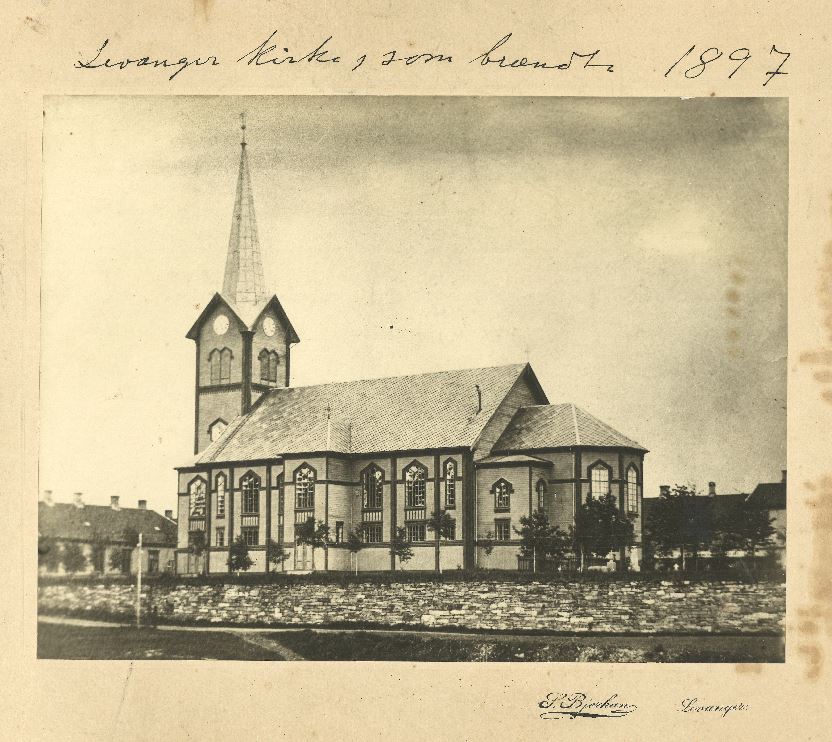
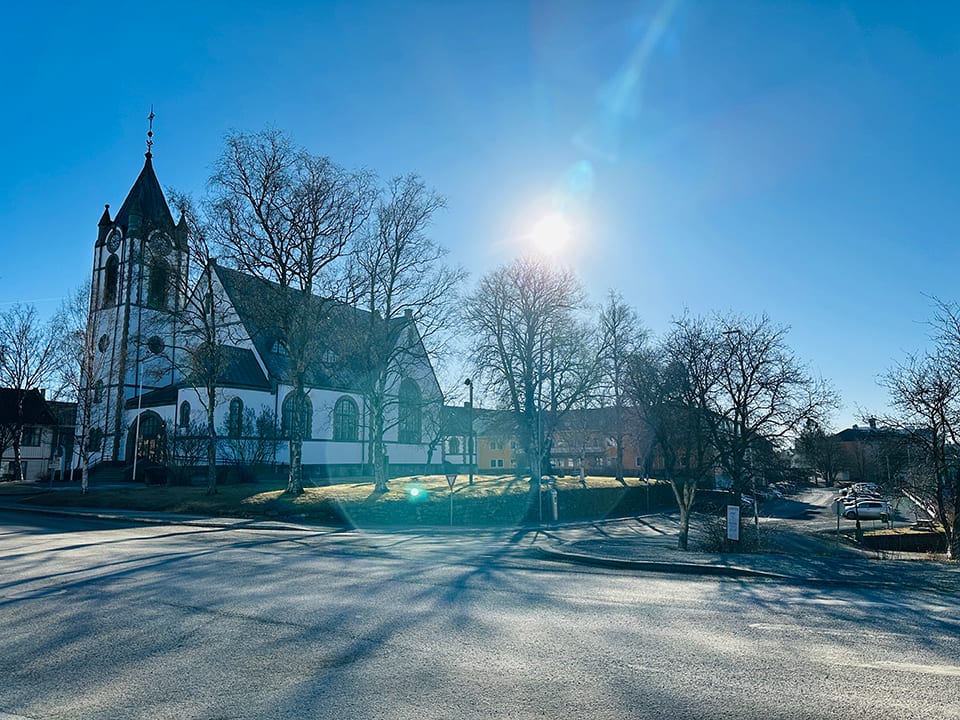
The stone church was rebuilt in Baroque style after the city fire of 1692, which started with lightning striking the church tower. The wooden church from 1870 burned down in the city fire of 1877. A new wooden church was built on the samefoundation butburned down in another city fire in 1897. After this, the current stone church was built and consecrated in 1902. If the story from the saga is correct, there may have been as many as five churches on the same site.
Sources:
Brendalsmo, Jan og Stylegar, Frans-Arne (red.). 2013. Levangerhistorier. Oslo: Novus forlag.
Askeladden, the Directorate for Cultural Heritage.
Protection: The Directorate for Cultural Heritage
Large parts of Levanger city centre were protected as a cultural environment on 9 November 2018. The protection includes the city’s streets and squares, green areas, and buildings with backyards. In total, 157 properties are fully or partially covered by the cultural environment protection.